
Analyse, manage, and smart-search thousands of documents
Use AI to analyse your unstructured textual data and document databases. Automatically retrieve key terms to help you make informed decisions. Make your business more efficient with TextMine today!

Find answers in your critical documents quickly and accurately with TextMine.
TextMine automates manual data entry and information retrieval tasks.
TextMine redistributes the freed-up time to higher-value tasks and decision-making.
Transform your document database into a structured dataset, enabling seamless tracking and scalable querying. Say goodbye to the cumbersome manual creation and upkeep of spreadsheets summarising your critical contracts and terms.
Safely store documents in a structured dataset
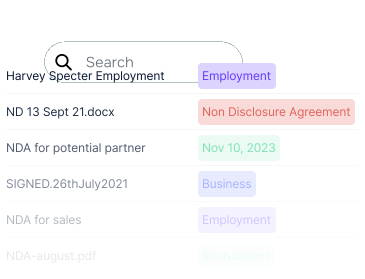
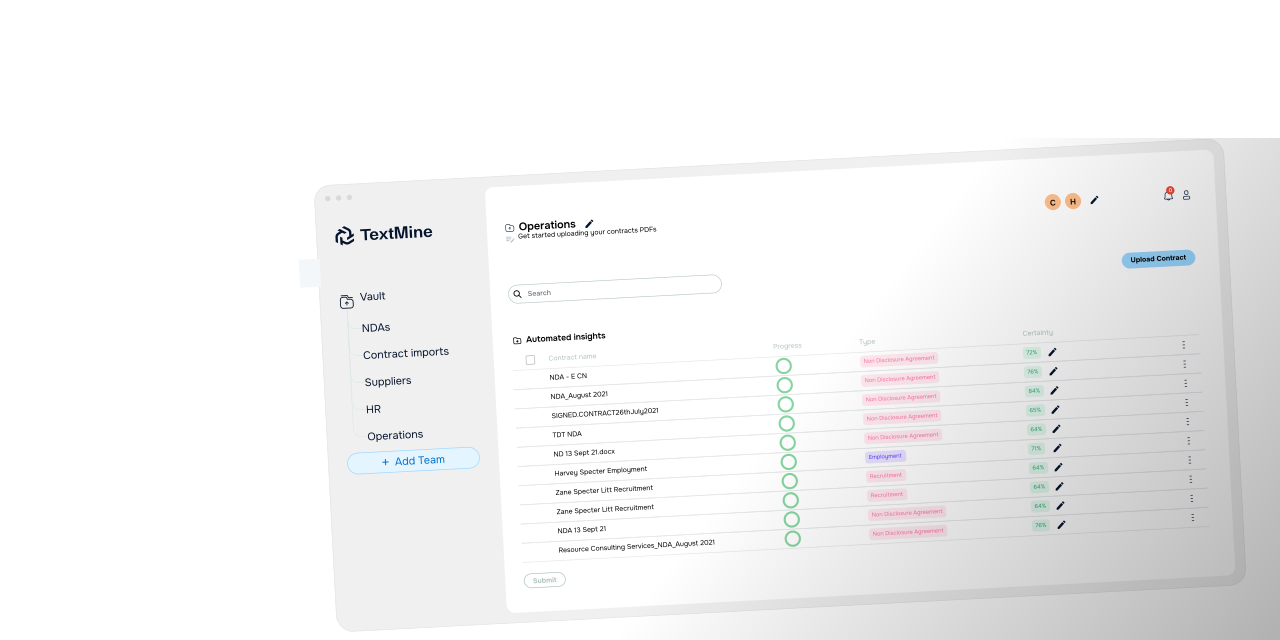
Upload thousands of documents to our Vault, where our LLM will analyse their textual data and determine their type and category, automagically creating a structured storage system that is easy to manage.
No need for manual sorting - TextMine's AI efficiently organises your business critical documents.
The AI magic unfolds as documents are automatically categorised into relevant sections: contracts, invoices, NDAs, agreements, and more.
Watch Vault in Action!
Vault comprehends textual data and extracts implicit and explicit insights from your business critical documents, which swiftly uncover a document's crucial terms, attributes, and potential contradictions.
Detecting
Extract
Answering
Try TextMine yourself!
Effortlessly organise and categorise your documents for proactive decisoin making and effortless compliance.
Save time managing docs every month
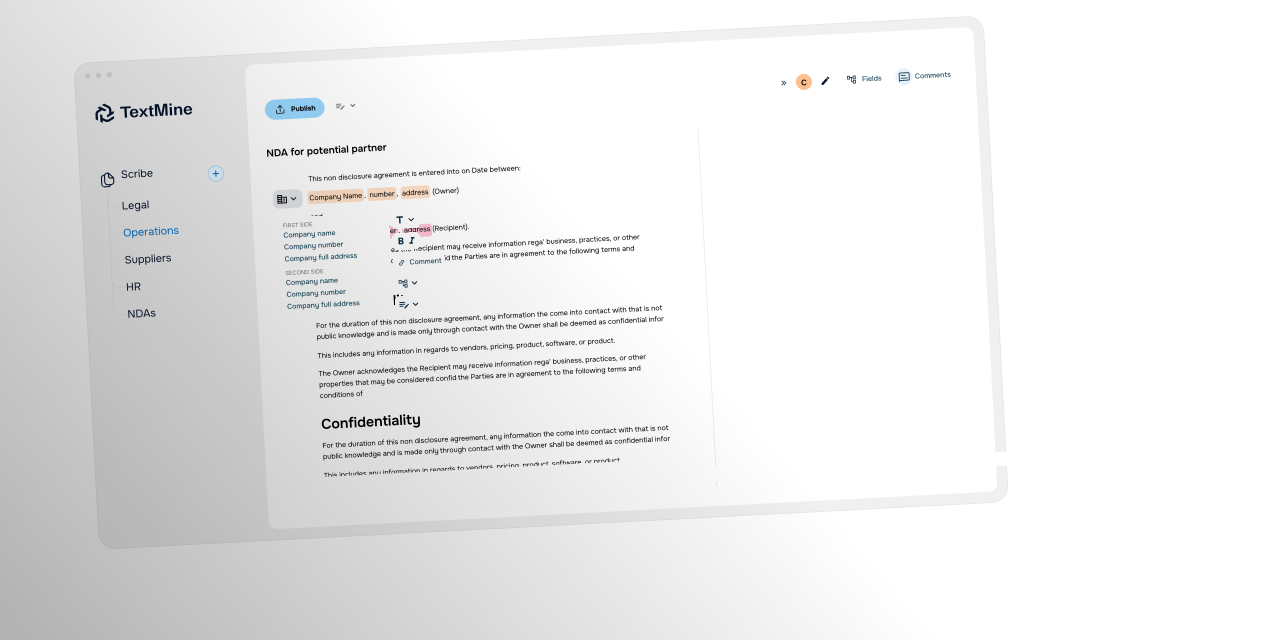
A versatile text editor which empowers you to craft smart documents from the ground up.
Craft documents and powerful templates
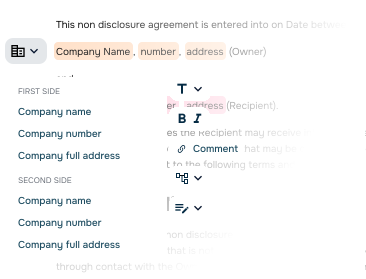
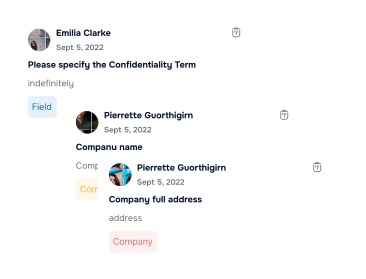
Scribe transforms traditional word templates into meticulously structured, interactive forms. Scribe enables users to design templates that leverage these forms for enhanced functionality. Scribe's documents are inherently structured, facilitating granular post-creation searchability and tracking.
trackable
A decision making platform which allows your organisation to leverage text and document based data to its full capacity.
Identification of documents from extracted data
Legislate retrieves valuable insights based on the text data in your documents. Understand how your key documents are driving your business individually or in aggregate.
Query regulated documents to ensure that your business is compliant.
Understand the underlying risk of your key documents such as contracts.
Make informed decisions with document and textual data.
A brief tour of just a small portion of TextMine's document data extraction and insight capabilities
What else can you do with TextMine?
Streamline Decision Making
Efficiently make informed decisions with our comprehensive document management system.
Streamline Due Diligence
Effortlessly manage and organise your due diligence documents with our cloud-based system.
Effortlessly Track Documents
Stay updated on the progress and status of your important documents in real-time.
Extract data from your documents with TextMine!
Effortlessly organise and categorise your documents with TextMine for better decision making and effortless compliance.

FAQs
Frequently asked questions about TextMine and our solutions.
TextMine is for business users who manage 1000s of business critical documents such as invoices, payslips, tender agreements and contracts.
TextMine's pricing is available on request.
TextMine is mobile friendly and can be accessed from a web browser on any device.
TextMine makes it easy to create business critical documents and explore the data they contain.
TextMine is insured. Please get in touch if you have any specific insurance questions or requirements.